
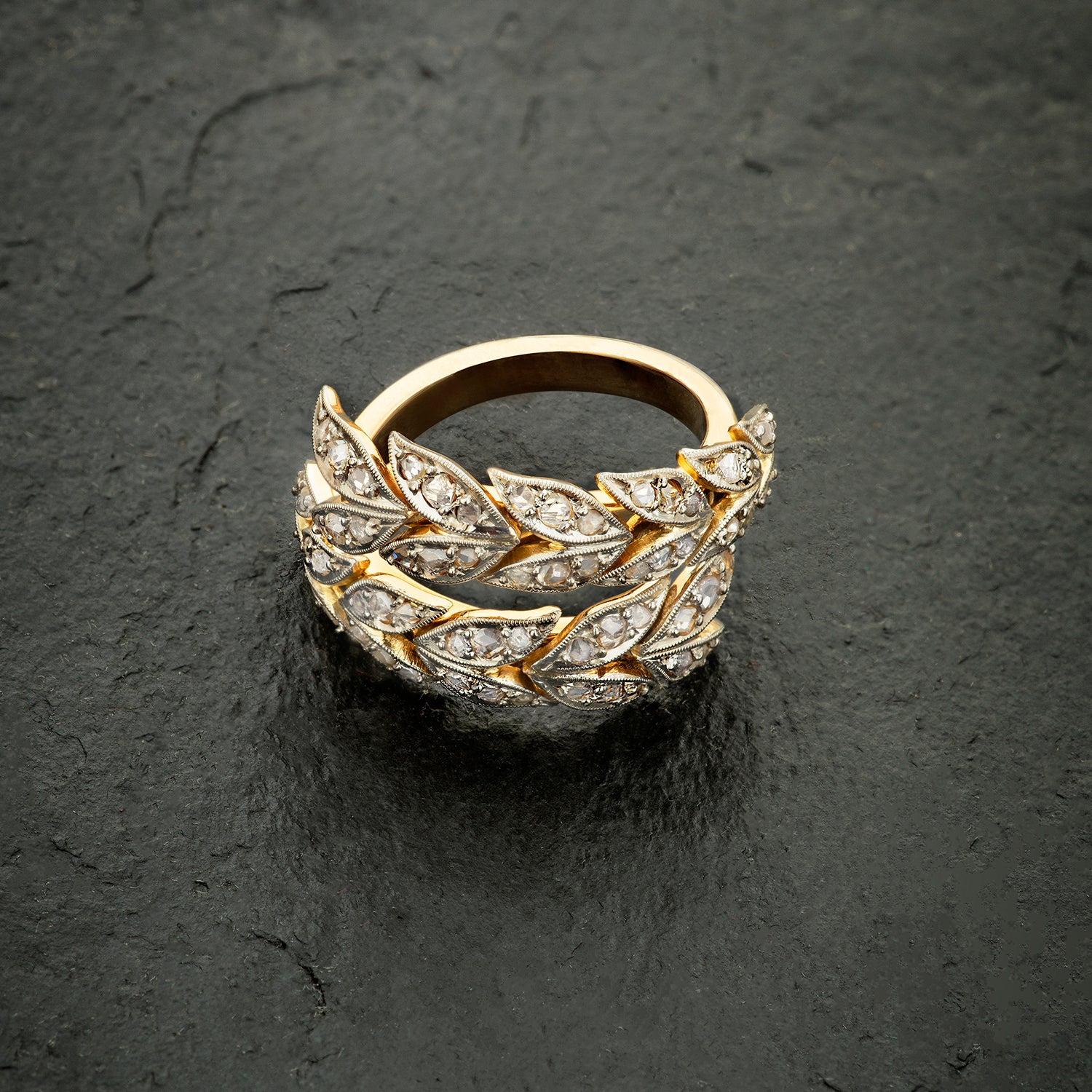

What is ethical jewellery and why does it matter?
If you want jewellery that aligns with your values, you are in the right place: what ethical means in practice, how to verify claims, and where to find independent assurances. Since 2009 we have worked with simple, transparent supply chains, a small group of trusted suppliers and craftspeople, and an uncompromising ethical framework. This approach offers honesty, knowledge, peace of mind and the confidence to choose a jewel you can feel proud of.

Luxury products can't be unethical, can they?
Treating ourselves to a luxury good, whether that's an expensive fragrance, a designer handbag or a piece of fine jewellery, makes us feel good. What many forget, however, is that a prestigious brand name and substantial price tag are by no means a guarantee of ethical practice. Whilst the exploitative endeavours of many a budget brand are laid bare, those of high-end fashion and jewellery lines are still largely overshadowed by glamorous reputations, impressive endorsements and the assumption that nothing which costs a lot of money could possibly be the product of immoral behaviour.
Sadly, the jewellery industry is one largely rooted in imperialism. From the methods used to mine gold to the treatment of those involved in diamond supply chains and the dubious production practices of the Far East, much of the jewellery that circulates today is marred by violence and exploitation. Although demand for ethical jewellery is growing by the day, when it comes to social, political, economic and environmental reparations, we still have a long way to go.
Right: Doughtnut Economics framework
What does 'ethical jewellery' actually mean?
There are roughly 7.65 billion people in the world, and for every one of those people, the word ethical means something different. It is an adjective that cannot be defined in simplistic terms.
The lens through which we view the world at Lebrusan Studio is the Doughnut Economics framework. A concept coined by British economist Kate Raworth, the Doughnut symbolises Earth's social and planetary boundaries. Humanity's challenge in the 21st century is to ensure that no one falls short on life's essentials, from food to housing, healthcare and a political voice, whilst also ensuring that we do not place excess collective pressure on Planet Earth's life-supporting ecosystems. As an ethical jewellery business, the success of every decision we make is measured by our adherence to these boundaries and any steps taken to reinforce them.
Defining what ethical jewellery means to you is about finding a framework that you can measure decision-making against, then combining tangible steps accordingly. Here is how we approach each one.
Read our Ethical Jewellery Movement Manifesto →

The problem with conventional jewellery: gold mining
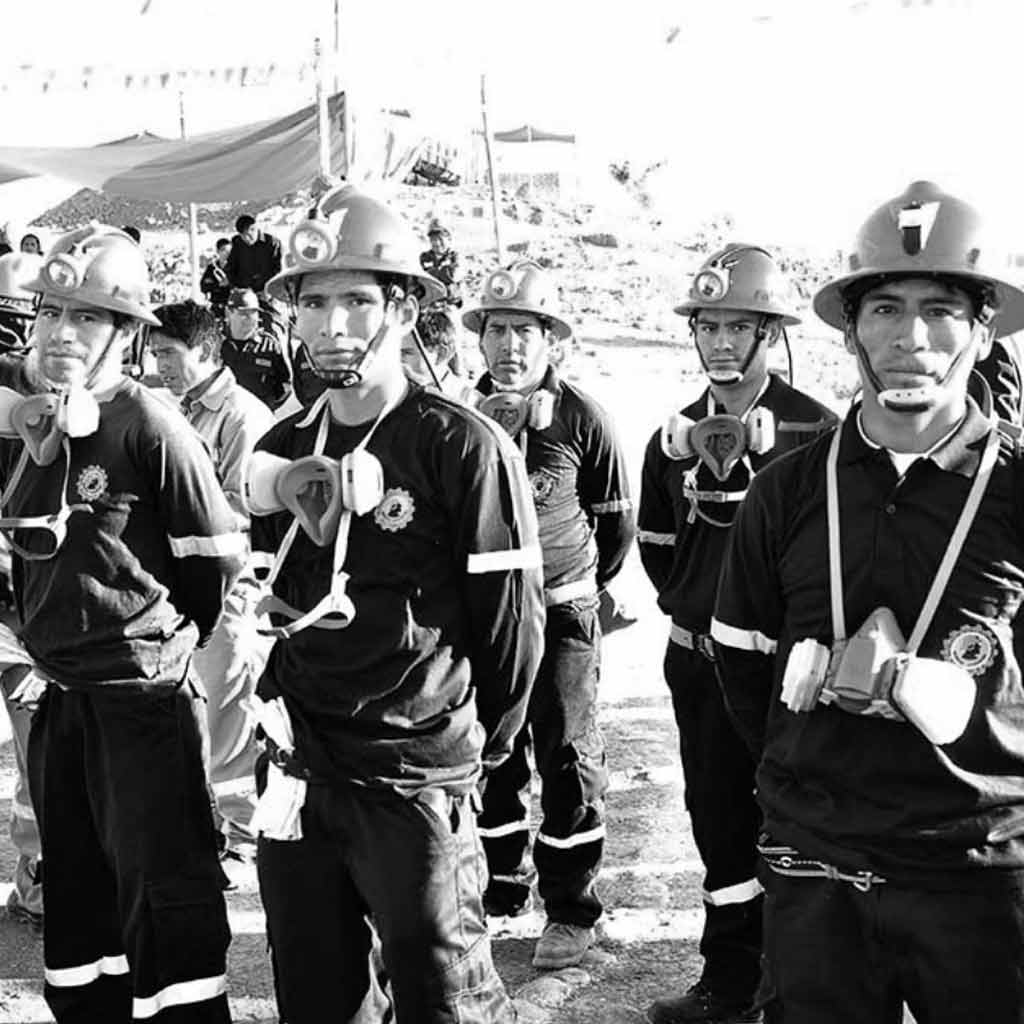
From abandoned mines filling the air with noxious dust to toxic waste spills forcing thousands of dead fish to the surface of rivers, the jewellery industry is responsible for enormous pressure on our planet. Vast volumes of land, water and energy are required to mine and produce even the most responsible precious materials available to us. The human cost is just as significant. Artisanal and small-scale miners are frequently exploited by middlemen, working without protective gear in structurally insecure pits and exposed to harmful chemicals.
Read the full story: The trouble with gold mining →
Right: Aerial image of water pollution caused by mining activity

Ethical jewellery follows fair trade principles
Jewellery that champions fair trade principles is jewellery that actively supports the human beings behind it. Traceability and third party certification of precious materials enable jewellers to ensure that our money contributes directly to social, environmental and healthcare initiatives in the communities where mining takes place. Artisanal and small-scale mines can be hazardous places, where miners are frequently exploited by middlemen, earning barely enough to get by, not to thrive, but to survive. And yet ASM is a legitimate livelihood, one that when managed responsibly has the power to fortify community foundations, feed families and educate the world. Fairtrade Gold and Fairmined Gold were two of the jewellery trade's very first ethical certification schemes, pioneered by our founder Arabel Lebrusan as one of just twelve jewellers in the world specially selected to do so.
Right: Our founder Arabel with miners at the Fairmined-certified Coodmilla mining cooperative in La Llanada, Colombia
Our metals: where your gold and platinum comes from
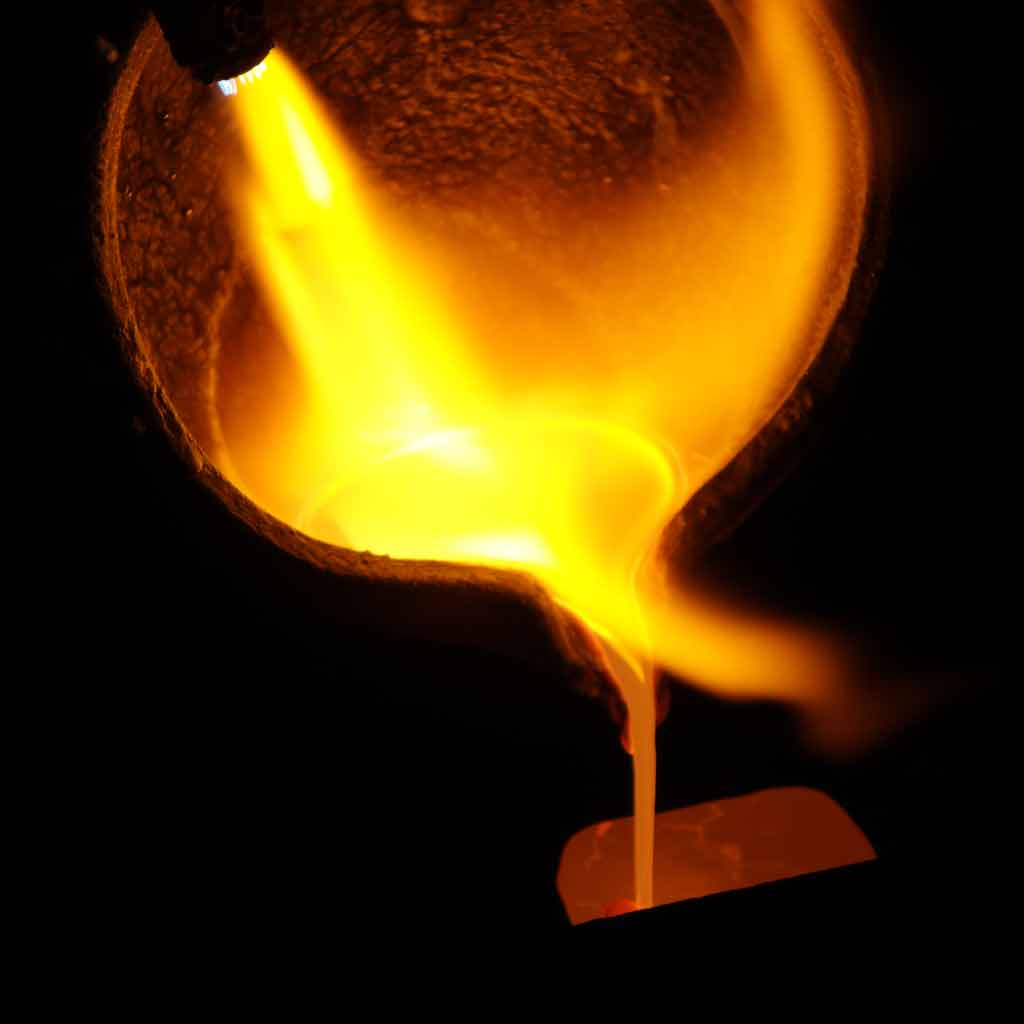
One of the most important decisions we make is which metals to work with. We offer three options: certified Fairmined gold and Fairmined Ecological gold, which support artisanal mining communities directly, and recycled gold and platinum, which prioritise environmental sustainability by keeping precious metal already above ground in circulation. Our Recycled+ Gold goes further still, pairing recycled metal with direct premiums paid to certified artisanal mining communities.
No single option is perfect. That is why we offer all three and help each client choose the route that best reflects their values.
Our gemstones: diamonds, sapphires and beyond
Ethical jewellery is not only about metals. Diamonds and gemstones can travel through many hands before they reach their final destination. Without the ability to trace these journeys, it is impossible to identify which tell stories you could wear with pride.
Every stone we work with, whether a newly mined Canadian diamond, a fair-traded Sri Lankan sapphire, an artisanal ocean diamond, or a reclaimed old-cut stone, has been sourced through a supplier who can account for its journey. We believe traceability alone is not enough, however. For jewellery to be truly ethical, it needs to work harder than simply knowing where a stone came from.
Ethical jewellery challenges and strives for better
In the very early stages of the ethical jewellery movement, most conversations revolved around traceability, the novel concept of challenging the opaque supply chains we had historically accepted as the norm. Rudimentary regulations such as the Kimberley Process have since been criticised for failing to address problems beyond the fundamental issue of traceability and for leaving too much room for error. We have learned a lot since then.
Developments in blockchain technology have helped to close some of the cracks. It is important, however, to make the distinction between traceable and ethical. Single Mine Origin gold and Canadian diamonds, for example, offer very little besides the assurance that they have been mined outside of conflict areas and in adherence to national labour laws, which is, as far as we are concerned, the bare minimum. For jewellery to be truly ethical, it needs to work a little harder.

Our commitment: what we do beyond sourcing
Ethics does not stop at materials. It extends to how we make things, who makes them, and what we do with the proceeds. Every piece of Lebrusan Studio jewellery is made in the UK by skilled craftspeople in Hatton Garden, minimising the distance our materials travel and championing traditional British craft. We have donated to The Water Project every quarter since 2015, planted a tree for every piece of jewellery we have sold since 2022, and raised funds for the Global March Against Child Labour.
Arabel Lebrusan has spent two decades at the forefront of the ethical jewellery movement, as a founding member of Fair Luxury, a Fairtrade Gold pioneer, and the deliverer of a TEDx talk on ethical jewellery.
Our full commitment: ethics, charity work and our manifesto →
Our Collections
Every piece we make is a jewel you can feel proud to wear and proud to pass on.