
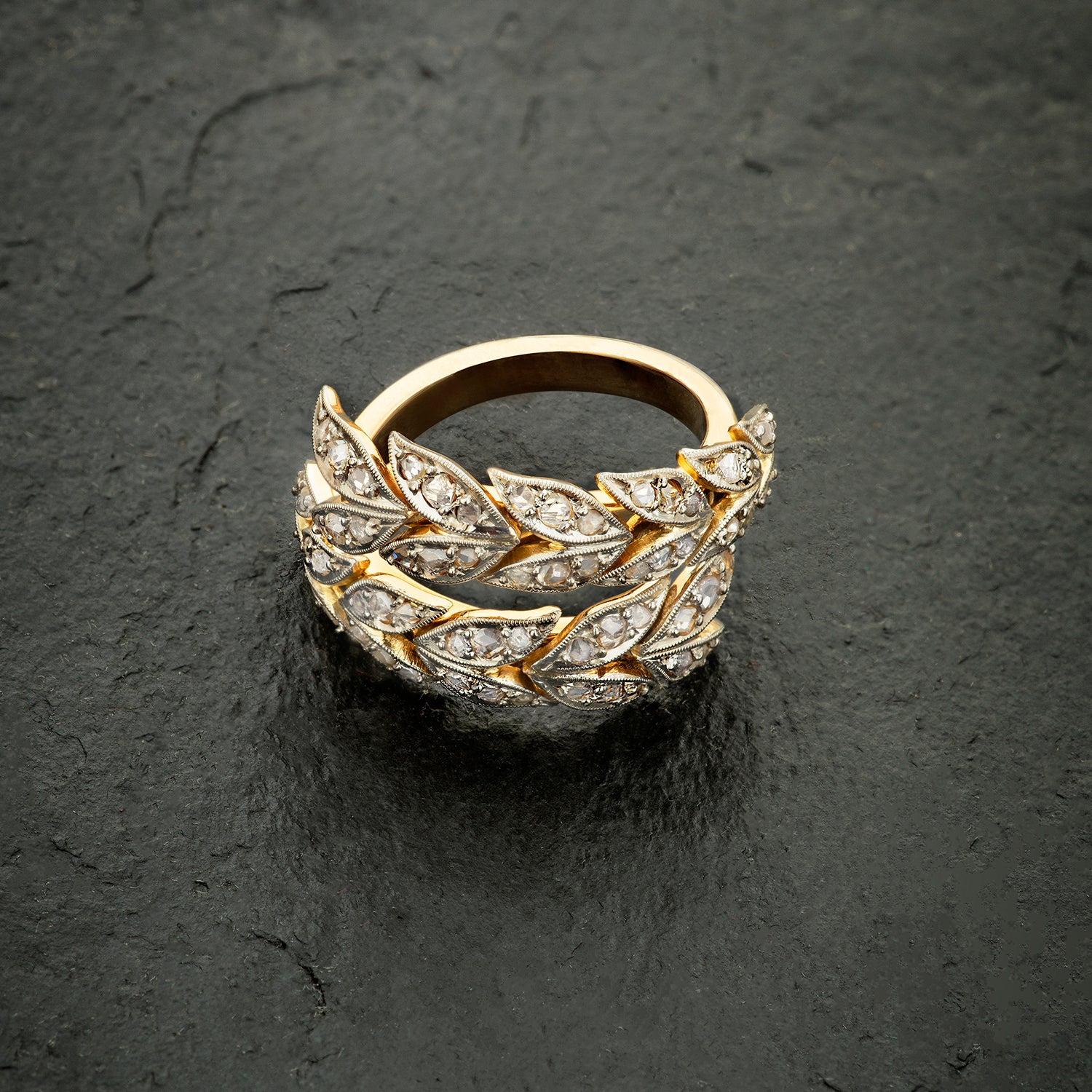

Our diamonds: traceable, conflict-free and responsibly sourced
Diamonds can pass through many hands before reaching their final destination. For us, it’s vital that we can trace ours back to source. With over 15 years of responsible sourcing, we’ve built trusted relationships with carefully chosen suppliers and Canadian distributors who share our values.
We take ethics seriously, recognised by multiple shortlists at the National Association of Jewellers Awards for sustainability and responsible sourcing. Unlike jewellers who rely solely on the Kimberley Process, we go further -demanding full documentation and refusing stones with even the faintest ties to exploitation. You can read more in our Ethical Sourcing Policy.
The Kimberley Process, created in 2003, is limited. It defines conflict diamonds only as those funding violent wars, overlooking other exploitation such as unsafe working conditions or political oppression. Certification also applies only to parcels of rough stones, not individuals, making it impossible to guarantee that a single diamond is truly conflict-free. That’s why we hold ourselves to higher standards, ensuring every diamond we offer is worthy of both its wearer and the world it comes from.
Part of our approach to ethical jewellery. Read our full commitment →

Canadian diamonds
FULLY TRACEABLE AND CONFLICT-FREE, WITH COMPLETE TRANSPARENCY ABOUT THEIR ENVIRONMENTAL IMPACT
The newly mined diamonds we work with most often are those of Canadian origin. Any stone of 0.3ct or above comes with a GIA certificate (or equivalent), while larger stones also carry a microscopic CanadaMark laser inscription - an independently verified certification that guarantees Canadian provenance.
Mined under some of the world’s strictest regulations, these diamonds are fully traceable and pose no risk of association with conflict or illegality. For transparency, however, it’s important to acknowledge that Canada produces around 12.5% of the world’s rough diamonds through large-scale open-pit mining. While Canadian diamonds are the benchmark for ethics and provenance, open-pit methods are undeniably harsh on the environment.
If reducing environmental impact is your highest priority, another choice - such as an artisanal Ocean Diamond or a reclaimed old-cut stone - may align better with your values.

Artisanal diamonds
100% TRACEABLE, CONFLICT-FREE AND BENEFICIAL TO LOCAL COMMUNITIES
An artisanal diamond is a diamond extracted on a small scale by an independent miner.
We currently source our artisanal diamonds from Ocean Diamonds, a company employing professional divers in South Africa to retrieve diamonds from the coastal seabed. The divers’ knowledge of the ocean means they know exactly where to search, avoiding unnecessary disturbance. Once brought to the surface with minimal trace, each diamond is passed on to a skilled local artisan for cutting and polishing.
Artisanal diamonds like these don’t just tick the ‘traceable’ and ‘environmentally conscious’ boxes - they actively contribute to positive change in their area of origin, supporting the local diving and diamond production industries in South Africa.

Reclaimed old cut diamonds
ENVIRONMENTALLY SUSTAINABLE AND TOTALLY UNIQUE
Global warming has reached crisis point, and it’s vital that we slow the rate at which we consume water, land and energy. We’ll never stop supporting small-scale miners, but it’s also time to celebrate materials already above-ground.
That’s why, alongside our new diamonds, we offer reclaimed old-cut diamonds. Pre-loved stones can rarely be traced to their original source, but reclaiming minimises the need for further mining - lending a beautiful gem a second lease of life.
The old cut is an antique style, hand-faceted with chunky, organic facets that draw the eye inward with a depth of sparkle unmatched by modern brilliants. Each one is a fabled piece of history - unrepeatable, steeped in character, and bursting with soul.

Lab-grown diamonds
A MODERN ALTERNATIVE FOR THE BUDGET-CONSCIOUS
We're romantics at heart, and what we love most about a natural diamond is its magic; a tiny fragment of geological history grown over thousands of years. Lab-grown diamonds don't tell the same unrepeatable stories but they do open up a different kind of possibility, inviting us to draw from a wider spectrum of cuts and colours at a fraction of the traditional price. This creates the option for bolder design choices and larger carat weights for design-led clients who might otherwise have had to compromise.
Though lab-grown diamonds are completely traceable and don't require mining, they do require real energy to cultivate. When it comes to their CO2 emissions, not all lab-grown diamonds are equal, which is why we're highly selective about the suppliers we work with. We look exclusively for growers who can support their claims of renewable energy sources and carbon reductions with proof. The SCS 007 Jewelry Sustainability Standard is the most rigorous ecolabel currently available, alongside independent CarbonNeutral certification and ISO 14001 environmental accreditation.
Lab-grown diamonds are not our default choice, but we understand their appeal. We're always happy to discuss the possibility of sourcing a responsibly lab-grown diamond if that's your preference.

Salt & Pepper Diamonds
The beautifully imperfect world of diamond inclusions.
Diamonds are natural occurrences, formed under intense heat and pressure over billions of years, approximately 100 miles beneath the earth's surface. Each little miracle is one of a kind. Inclusions are small birthmarks that develop throughout the process of diamond formation; some are foreign matter that has worked its way into the diamond's fabric, others are structural discrepancies caused by heat and pressure. A salt and pepper diamond is one that boasts a particularly high volume of black and white inclusions in the form of spots, feathers, cracks, clouds or chips.
According to the 4Cs grading system, salt and pepper diamonds are imperfect. In our eyes, however, it's these very flaws that make them special. Their commercial abundance make them a more affordable option than their 'perfect' counterparts, lending a sense of possibility without sacrificing the diamond guarantee of durability. It could also be argued that the salt and pepper diamond is the white diamond's more sustainable sister. Whilst tonnes of earth must be shifted to extract a small handful of gem-quality diamonds, salt and pepper diamonds are more readily available, making their journey to the surface shorter and less consuming.
Unfortunately, traceable salt and pepper diamonds with sound ethical credentials are few and far between, so we don't stumble upon these one-in-a-million wonders all that often. We're always ready to try our best, however.
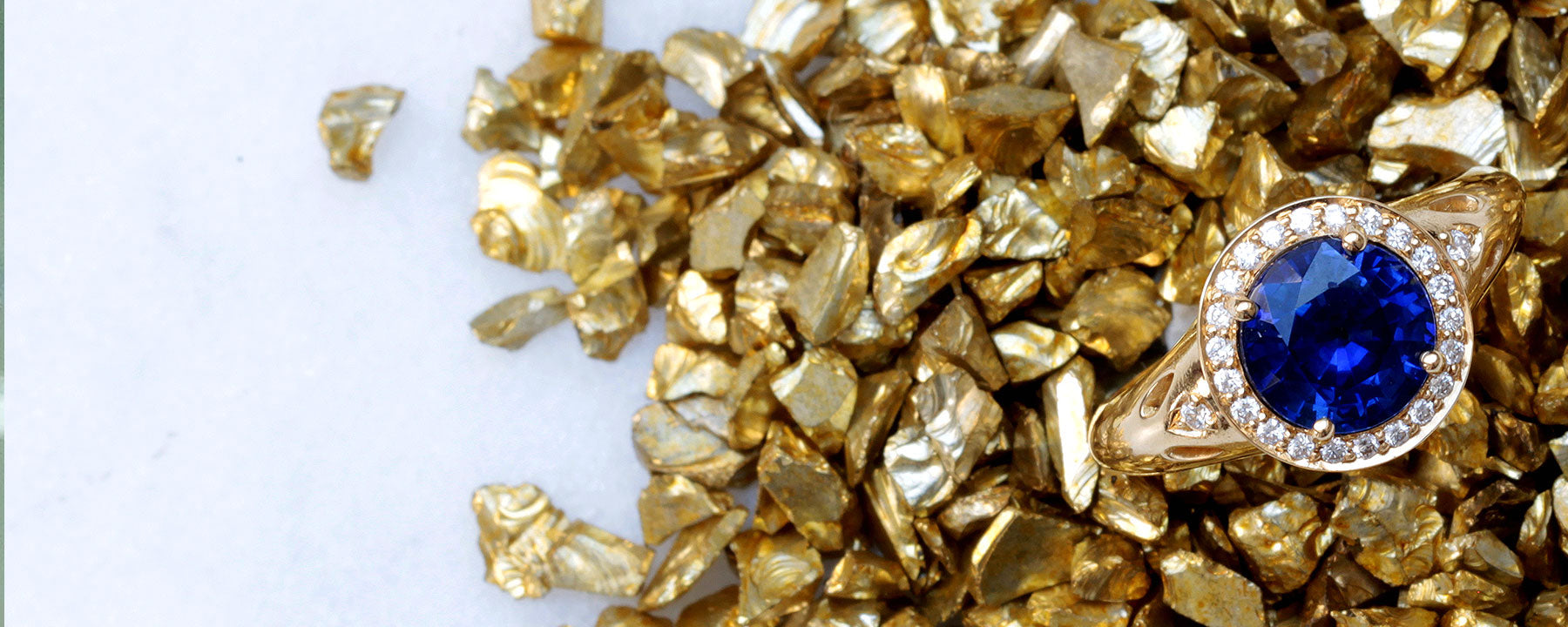
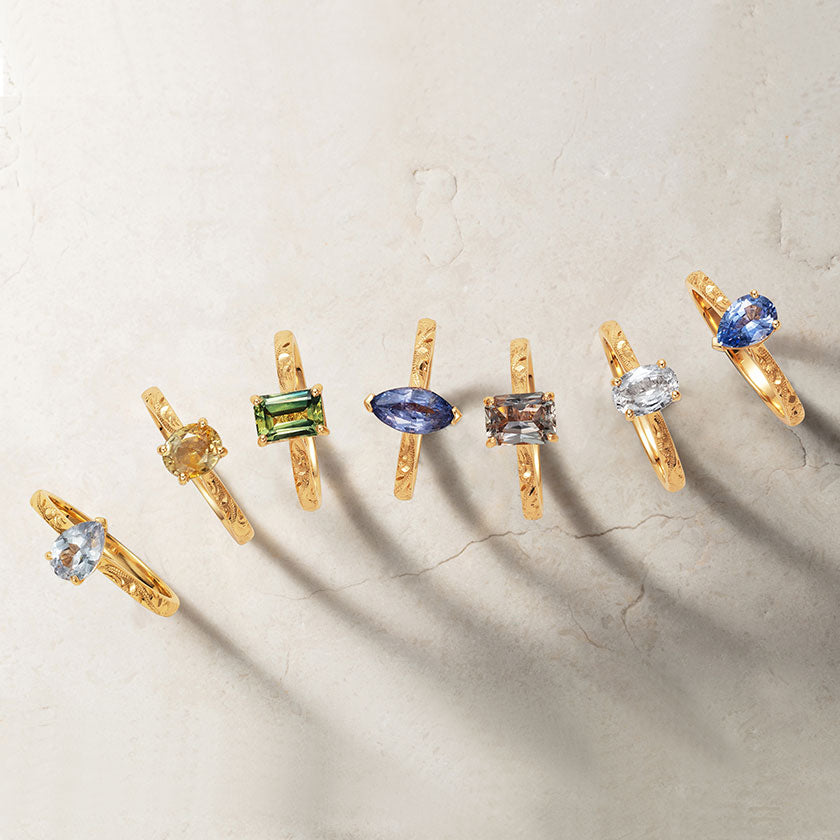
Looking for sapphires or coloured gemstones?
Our commitment to responsible sourcing extends beyond diamonds. We work with fair-traded sapphires from Sri Lanka, Australia, Malawi and Montana, as well as ethically sourced rubies, emeralds and pearls.
Need help?
Your questions about choosing an ethical diamond, answered
The 'conflict-free' label simply means a diamond has not funded armed conflict, as defined by the Kimberley Process. As a definition, it is narrow; it tells us nothing about working conditions, environmental damage or labour practices. By our standards, an 'ethical diamond' goes further: it is traceable, sourced from a supplier who can account for its full journey, and chosen by a jeweller who refuses stones with any ties to exploitation. At Lebrusan Studio, conflict-free is the baseline, not the standard.
The Kimberley Process was created in 2003 to stem the flow of conflict diamonds, but it has significant limitations. It defines conflict diamonds only as stones funding violent wars, which excludes other forms of exploitation including unsafe working conditions and political oppression. Certification also applies to parcels of rough stones rather than individual diamonds, making it impossible to guarantee that a single stone is truly clean. We hold ourselves to a higher standard and require full documentation from every supplier.
Canadian diamonds are mined under some of the world's strictest environmental and labour regulations. Any stone of 0.3ct or above that we supply comes with a GIA certificate or equivalent, and larger stones carry a microscopic CanadaMark laser inscription, an independently verified certification guaranteeing Canadian provenance. They are fully traceable and carry no risk of association with conflict. It is worth noting, however, that Canada uses large-scale open-pit mining methods, which have a significant environmental footprint. If minimising environmental impact is your priority, a reclaimed old-cut stone or artisanal Ocean Diamond may be a better fit.
An artisanal diamond is extracted on a small scale by an independent miner rather than a large mining company. The artisanal diamonds we work with come from Ocean Diamonds, a company employing professional divers in South Africa to retrieve diamonds from the coastal seabed. Each stone is brought to the surface with minimal environmental disturbance, then passed to a skilled local artisan for cutting and polishing. These diamonds are fully traceable, conflict-free, and actively support the local diving and diamond production industries in South Africa.
Yes, and for several reasons. Reclaimed stones require no new mining, making them the most environmentally sustainable diamond option. Old-cut diamonds were hand-faceted using antique techniques, giving them chunkier, more organic facets and a depth of sparkle that modern brilliants do not replicate. Each one is entirely unique and unrepeatable. The only trade-off is that pre-loved stones cannot usually be traced to their original source, though they have already been above ground for generations.
Lab-grown diamonds are real diamonds, chemically identical to mined stones but grown in a laboratory rather than extracted from the earth. They do not require mining, which is an environmental advantage. However, they consume significant energy to produce, and CO2 emissions are far from minimal. They are also not our default recommendation, because natural diamonds carry a geological and emotional uniqueness that lab-grown stones cannot replicate. We're open to exploring lab-grown options with clients for whom design flexibility or budget is the primary consideration, but we would rather help you find a natural stone you can feel genuinely proud of.