
It is possible to tell a natural diamond from a lab-grown diamond?
In the world of diamonds, two categories now coexist: natural diamonds formed over billions of years deep within the Earth’s mantle, and lab‑grown diamonds created in weeks under controlled conditions. We’ve spoken a lot in recent years about our moral stance on lab-grown diamonds and the role they play within society, but today this blog post answers the fundamental question: Is it possible to tell a lab-grown diamond apart from a natural diamond?
Natural diamonds vs. lab-grown diamonds: Origin and formation
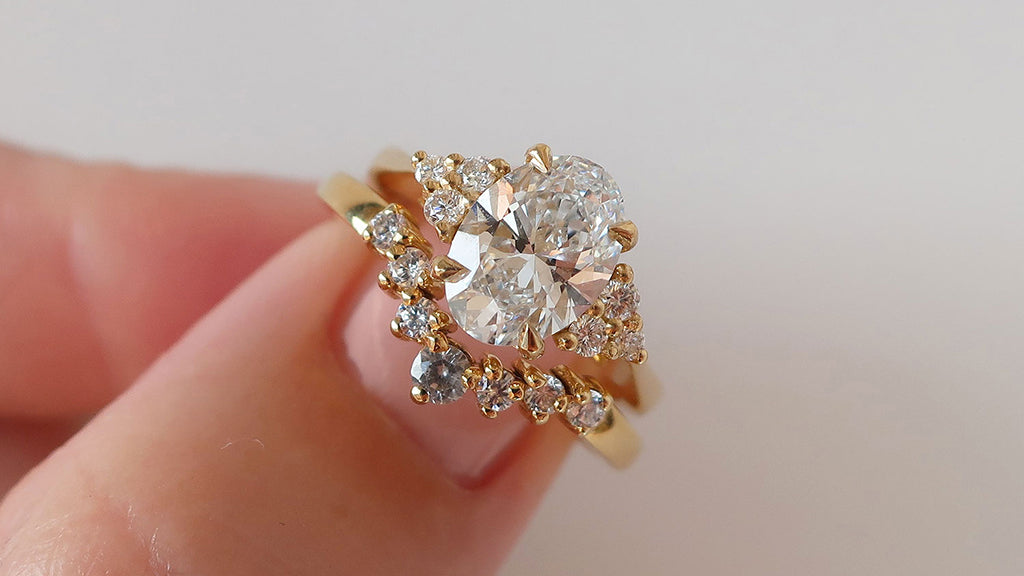
 A client’s 1.04ct lab-grown brilliant-cut diamond
Natural diamonds are forged deep under immense pressure and heat over 1–3 billion years, then carried to the surface by volcanic eruptions. Each stone is a product of geology, Mother Nature’s patience, and Planet Earth's deep time.
By contrast, lab‑grown diamonds are created through industrial processes like Chemical Vapour Deposition (CVD) or High‑Pressure High‑Temperature (HPHT). These mimic natural conditions - but in sterilised, repeatable factory settings, producing diamonds in as few as 3-4 weeks.
Natural diamonds vs. lab-grown diamonds: Physical similarities and differences
 Our client’s bespoke solitaire engagement ring, repurposing their natural 1.5ct heirloom diamonds
Contrary to what one might expect when they hear the words ‘lab’ and ‘grown,’ lab-grown diamonds are in fact real diamonds, sharing identical chemical and physical properties with natural diamonds. In other words, both are pure carbon, score a 10 on the Mohs Scale of Hardness, and exhibit brilliant light dispersion. Just like natural diamonds, lab-grown diamonds scratch glass, sparkle intensely, and feel equally as substantial in your hand.
However, under professional scrutiny, some subtle structural differences emerge. Crystal‑growth patterns in natural diamonds slightly differ from those in lab‑grown ones – like the natural grain in wood vs. engineered laminate. DiamondView is a hand-held instrument by DeBeers, now available to retail staff, that reveals growth patterns such as concentric patterns (characteristic of natural diamonds), cross-shaped (HPHT) and striations (CVD). Meanwhile, spectroscopic tools help to identify trace elements like nitrogen, which are generally trapped within natural diamonds during formation.
Natural diamonds vs. lab-grown diamonds: Professional testing and grading

A 1.19ct lab-grown diamond and two pear-cut Ocean Diamonds
Gemological laboratories like the Gemmological Institute of America (GIA), the International Gemmological Institute (IGI) and others can reliably distinguish natural from lab‑grown using:
-
Growth‑pattern analysis: Reveals tell‑tale signatures in crystal structure
-
Spectroscopy: Identifies inclusions and ‘defects’ (nitrogen, boron, growth striations) that are characteristic of both natural diamonds and lab-grown diamonds
-
Thermal conductivity probes: Fast, non‑destructive tests exploiting diamond's high thermal conductivity to analyse the rate at which it down
Diamond grading reports must specify origin, with natural‑diamond certificates indicating earth‑mined origin and lab‑grown certificates (e.g. from the GIA or IGI) printed on blue paper, explicitly stating ‘laboratory-grown’ or ‘LGD.’
Any reputable lab will disclose origin clearly; legally, marketing a natural diamond simply as ‘diamond’ implies that it’s from the Earth.
Natural diamonds vs. lab-grown diamonds: Chain of custody and certification
 George’s bespoke cluster engagement ring, with a 1.44ct lab-grown central diamond
Natural and lab‑grown diamonds must be kept strictly separate throughout their journeys – from mining to cutting, grading and setting – by using:
-
Tamper‑proof packaging
-
Dedicated facilities or workflows
-
Independent verification testing
These measures prevent mislabelling and protect consumer trust.
Natural diamonds vs. lab-grown diamonds: Price and market trends

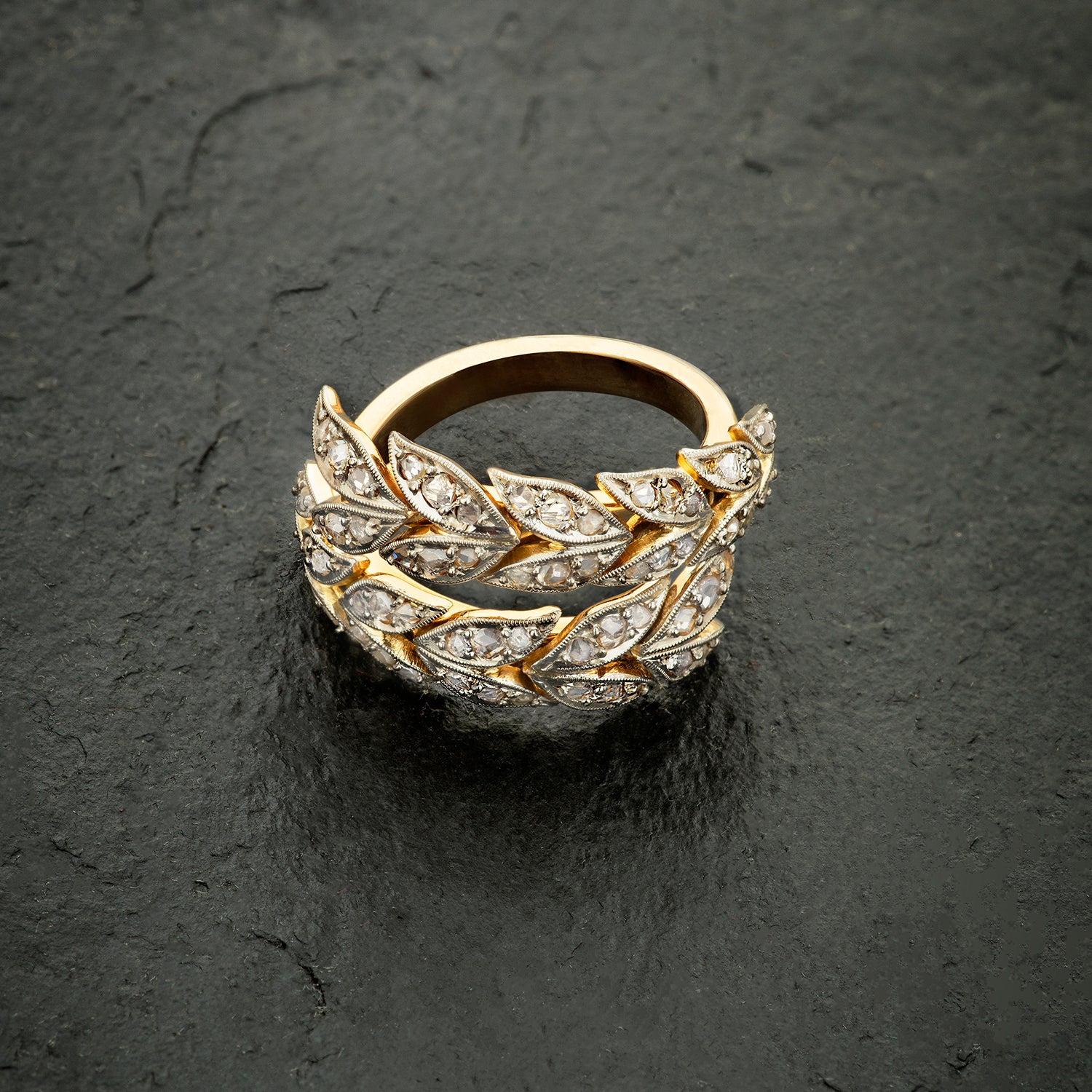
The ready-to-wear Fancy Hera engagement ring with 0.92ct natural old-cut diamond
Lab‑grown diamonds cost far less than their natural counterparts, and their prices fluctuate significantly. For example, a 1.5ct lab-grown diamond dropped ~83% in price from 2015 ($10,750) to 2024 ($1,770). By 2025, however, retail mark-up has soared - with margins rising from ~46% to ~84%
Natural diamond prices, by contrast, have appreciated at ~3% annually over the past 50 years. Natural diamonds are finite and increasingly rare. Global diamond recovery today is 37% lower than 2005 levels, and the annual 1ct diamond output could fit inside one exercise ball. It’s the natural diamond’s rarity that contributes to long‑term value retention and prestige.
On the other hand, lab‑grown stones can be produced at scale. Whilst initial affordability is of course a plus, resale markets for lab-grown diamonds are undeveloped - potential resale value can plummet by as much as 80% - or more.
Natural diamonds vs. lab-grown diamonds: What consumers can do
 Alex’s bespoke engagement ring with 0.96ct natural old-cut diamond
If – after covering all these bases – you remain uncertain about the provenance of a diamond, it’s best to trust your instincts. Transparency is not only a legal requirement, but the least that any reputable jeweller would like to offer.
This being said, here are some questions you may wish to ask your jeweller for added peace of mind:
-
Does this diamond come with a grading report?
-
If so, which lab performed the grading, and does it clearly state its origin?
-
Do you know how the diamond was transported and stored to avoid confusion?
To summarise:
|
Aspect |
Natural Diamond |
Lab-grown diamond |
|
|
|
|
|
Origin |
Earthborn (1–3 billion years) |
Factory-made (a few weeks) |
|
Detectability |
Confirmed by lab tests and grading |
Easily flagged as synthetic via instruments |
|
Price |
Higher upfront, stable/growing market value |
Lower cost, steep depreciation |
|
Supply |
Finite, rare |
Scalable, mass-produced |
|
Environmental Impact |
Varies (mined responsibly may be positive) |
Largely energy-intensive (grid dependent) - though there are some more environmentally conscious options available |
|
Certification |
Industry norms (GIA, IGI, grading papers) |
Separate LGD certificates, blue forms |
If you’re charmed by the internal magic, rarity and long-term value of the natural diamond, then you’re in the right place. We at Lebrusan Studio are committed to cherishing Mother Nature’s gifts in ways that are sustainable for people and planet – whether that be vintage old-cut diamonds or responsibly sourced artisanal Ocean Diamonds.
If, however, you’re seeking affordability, aesthetic flawlessness and the futuristic thrill of a lab-grown diamond, please take a little time to educate yourself on the differences between truly sustainable lab-grown diamond producers and those who are greenwashing. It’s easy to misconceive all lab-grown diamonds as more environmentally sustainable than their mined counterparts, but it’s important to remember that the producers committed to truly reducing their carbon footprint are still a minority. When you source a lab-grown diamond, don’t be afraid to probe the manufacturer’s environmental claims and the diamond’s grading details.
Whichever path you choose, remember: A diamond is more than just a sparkly object - it’s a story. Make sure yours is one you can feel proud of!

Written by Ruby McGonigle