
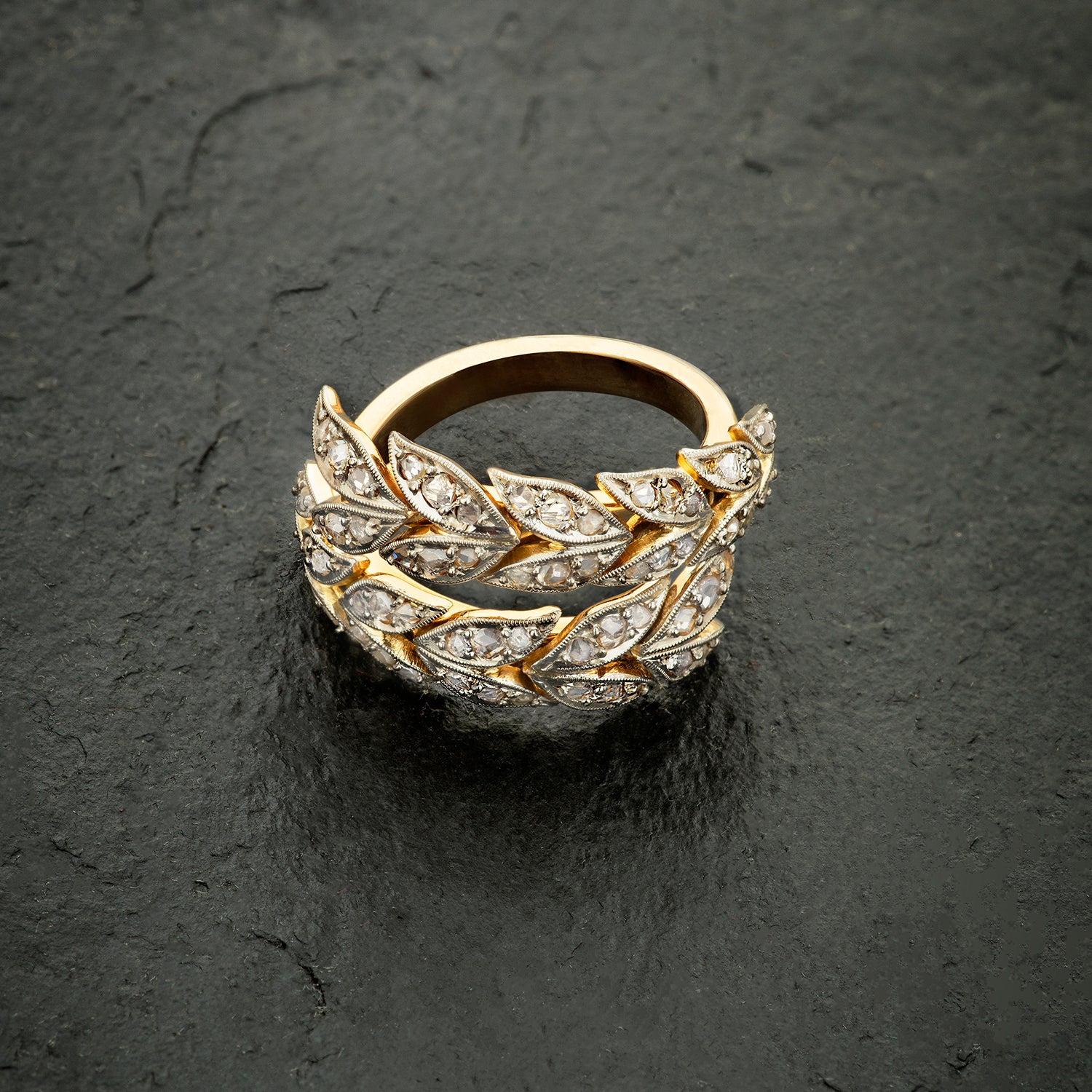

How To Make a Wedding Band Fit Perfectly Flush To Your Engagement Ring
Most old-fashioned and long-standing rules about wedding bands and engagement rings no longer exist. Today, you can go traditional or risky; select a matching engagement ring and wedding band set or items that are charmingly dissimilar; opt for timeless or one-in-a-million. Whatever you feel best represents your personal fairytale is yours for the taking.
But if you're uncomfortable when wearing your wedding jewellery, that's an issue you must address. One of the more common dilemmas that modern brides face is in finding a wedding band to fit flush against their existing engagement ring.

A bespoke emerald-cut and trillion-cut diamond trilogy engagement ring with our Diamond Circlet wedding band
Though we did say that rules don't really apply, a few traditions do hold fast. Rule Number One is that the wedding band, if worn on the same finger as your engagement ring, generally sits beneath it - closest to the heart. With this arrangement, uncomfortable gaps can occur when the engagement ring setting clashes with the band below. The good news is that there are a few easy solutions to this unwieldy problem.
OPTION 1. Shaped Ring

Melody's bespoke wedding band, shaped to embrace her unique vintage toi et moi engagement ring
The most successful flush fittings are usually achieved by shaped bands. They're designed and skilfully crafted to follow the contour of your engagement ring, leaving no gaps between the two jewels. If executed correctly, both rings will complement each other so seamlessly they appear almost merged.
As you work with your partner to choose an engagement ring or drop helpful hints as to the styles you prefer, maintain a sharp eye for jewellers (like us!) that specialise in bespoke bands which sympathise with the nooks and crannies of our clients' unique engagement rings.
OPTION 2. Raised Setting

Our Artisan solitaire engagement ring, embraced comfortably by two Artisan Filigree jacket rings
Many contemporary jewellers boast raised setting engagement rings in their collections. The defining characteristic of these rings is the height of the central gemstone, elevated upwards and away from the band. This lack of intrusion from the stone means that a straight wedding band can slide up close to the engagement ring.
Some jewellers will even modify the setting of an existing ring to ensure there's space for a future wedding band below. The latter would require them simply to raise the stone's setting further from the band.
Unfortunately, however, prominent gemstone settings that protrude to tend to catch on fabric and hair, leaving them more vulnerable to damage or gemstone loss than low-lying rub-over settings. If you lead an active lifestyle which involves manual labour or lots of sports, we'd recommend thinking carefully about whether or not a raised gemstone setting is the most practical choice for you.
Remember: Your Wedding Ring Doesn’t Have To Match Your Partner's
 Our Tethys engagement ring paired with our Wishbone Diamond Crown wedding band
Lastly, remember you can opt for a wedding band that's entirely different from your partner's if that allows your rings to harmonise with one another.

Written by Ruby McGonigle